

Bloomberg Optimizes Chatbots to Advance Digital Workflows for Financial Professionals

Bloomberg is rolling out an innovative service that enables chatbots to actively extract and present critical business intelligence within its terminals and integrate sourced data with a firms’ in-house data applications to deliver rich, real-time insights.
Beyond Crypto Payments: Stablecoin Use Cases

Stablecoin are fundamentally useful for crypto payments and trading because they inherently maintain a peg to a fiat currency, like the U.S. dollar. To understand the potential of stablecoins, we explore some of its many applications.
Understanding PayPal’s New PYUSD Stablecoin
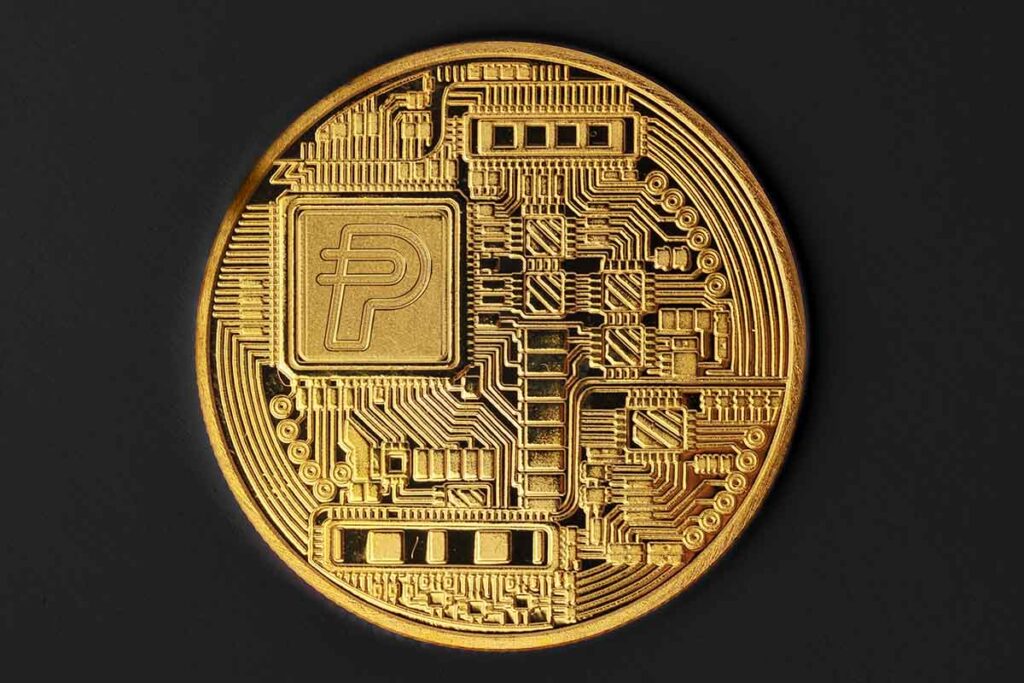
An overview of PayPal’s PYUSD stablecoin, which has the potential to seamlessly incorporate a dollar-pegged cryptocurrency token into the global payments ecosystem.
Cboe Digital is Pioneering Cryptocurrency

Cboe Digital aims to become the first U.S. regulated crypto-native combined exchange and clearinghouse, offering margined futures for crypto, and other crypto products. The move by the exchange represents the growing acceptance and integration of cryptocurrency derivatives into traditional financial markets.
Many Uses of Stablecoins Drive Growth
A closer look at the many ways in which stablecoins are being applied hints at why global payments giant PayPal may have decided to enter this market.
Breaking Down Some Market Data Vendors

Market data has risen to prominence as a substantial and continually expanding expense for investment and trading firms. As data assumes a pivotal role in shaping financial decisions, the strategic considerations surrounding data acquisition become paramount to achieving success.
Unlocking Alpha: The Data Revolution in Equity and Securities Trading

In equity and securities trading, the pursuit of alpha, that elusive edge that surpasses market performance, is undergoing a profound transformation. Traditionally, traders leaned on conventional market data, but a rising trend is ushering in a new era — one driven by the strategic use of alternative data for gaining a competitive edge.
T + 1 Next Day Settlement Countdown in Full Swing

The shift to T+1 settlement introduces a sense of trepidation among some market participants. Is the market ready for the transition?
Transforming the Fixed Income Market with EMS Technology: A Paradigm Shift in Adoption

The traditionally slower-paced fixed income market is undergoing a technological renaissance, with EMS platforms taking center stage in this transformation. Within the evolving technology landscape, fixed income trading professionals are finding that execution management system (EMS) platforms offer significant value by bridging the gap between conventional analog workflows and contemporary electronic equities-style models. By digitizing the workflow, these platforms offer substantial competitive advantages according to buy-side traders. The growing interest in EMS technology is substantiated by insights from a recent survey by Coalition Greenwich, conducted in partnership with SaaS and EMS system provider TS Imagine. Survey results from 41 senior buy-side fixed-income trading professionals, representing firms with $22 trillion AUM, reveal two prominent advantages: alleviating concerns about regulatory burdens and delivering remarkable time-saving potential within the trading process. TS Imagine estimates that transitioning to electronic platforms reduces tedious workflows and could save bond traders up to 1,134 hours annually. The study uncovers an interesting divergence: while 39 percent perceive their systems as EMS, only 12 percent meet the stringent technical definition of an EMS capable of managing varied venues and data sources concurrently. Survey respondents that had not transitioned over to electronic trading expressed a strong interest in doing so. The study uncovers an interesting divergence: while 39 percent perceive their systems as EMS, only 12 percent meet the stringent technical definition of an EMS capable of managing varied venues and data sources concurrently. Survey respondents that had not transitioned over to electronic trading expressed a strong interest in doing so. “While cutting-edge EMSs have been available to the market for some time, only a relatively small share of survey participants are using systems that can accurately be labeled as (an) EMS, and only the earliest and most progressive adopters are realizing significant improvements at this point. That situation is set to change quickly despite nascent adoption rates,” said Audrey Blater, Market Structure & Technology researcher for Coalition Greenwich. Taking into consideration how survey respondents perceived their trading system to be a pure EMS, provides a very clear indicator that there is room for EMS technology providers to educate the market, innovate their offerings, and effectively position themselves to meet the varied needs and perceptions of traders and investment professionals seeking EMS solutions. The reasons for the substantial technology gap between the fixed income and equities markets are multifaceted. This divide can be attributed to factors such as the presence of intricate and non-standardized products, the abundance of market data, and data quality issues. Additionally, the predominant mode of trading operations occurs via phone and manual processes, leading to reduced transparency and inefficiencies When looking at the potential top motivators for adopting an EMS, 63 percent of those surveyed highlighted access to liquidity from multiple sources in a single blotter as one of the top motivators. This was closely followed by increased automation of the trading workflow (61 percent). Spencer Lee, Chief Markets Officer and Head of Fixed Income at TS Imagine, emphasizes that today’s traders seek cross-venue liquidity, streamlined workflows, and data amalgamation. “When building a fixed income EMS, we therefore have to consider a much broader array of factors and tools that investing teams need to navigate the market while abiding by increasingly stringent regulation,” Lee told TheTrade in an inteview. “To do this, a big focus for us when building TradeSmart (EMS) has been on giving traders as much market intelligence as possible – helping paint a detailed picture of market liquidity, the best way to execute orders and the best dealers or venues to interact with.” The bullish outlook on further electronification in the fixed income domain signifies the imperative of new technology. EMS platforms have the ability to empower the buy side by efficiently connecting them with diverse liquidity sources, creating fresh avenues for investment growth. This transformation marks a definitive shift, with EMS technology at the helm, reshaping fixed income trading dynamics.
Money20/20 Panel: Why DeFi Matters for Payment Systems

Will DeFi harmoniously coexist with or entirely disrupt and replace existing financial ecosystems? Money 2020 panel addresses the question.